New project to ensure children a good transition from home to daycare
How can health visitors, daycare providers and families work together to ensure children experience a positive transition from home to daycare – and prevent minor challenges from developing into larger problems? This is what practitoners and researchers are investigating together in the PhD project Early Links – Stronger Starts.
27. January 2026
Most parents recognize the feeling of uncertainty when parental leave is coming to an end and their child is about to start daycare. The transition is vulnerable — both for parents and for the child, who must adjust to new adults, new routines and new social, emotional and cognitive demands.
At the same time, the family’s primary professional contact shifts — from the health visitor to daycare staff. If parents, health visitors and daycare professionals do not communicate and systematically share knowledge, there is a risk that important information about the child and family will be lost.
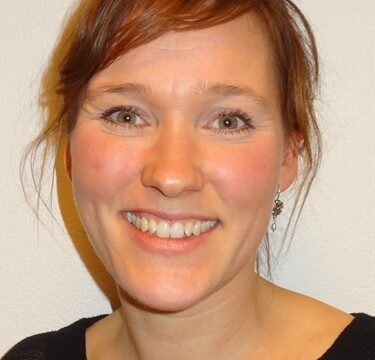
In the PhD project Early Links – Stronger Starts, PhD student Anne Aggerholm Jønsson therefore examines how collaboration between health visitors, daycare providers and families can be strengthened during the transition from home to daycare.
“During a child’s first year of life, the health visitor often gains in-depth knowledge of both the child and the family. She builds insight into the child’s wellbeing and development, as well as the family’s situation — including both minor and major challenges they may be facing. But that knowledge is not always brought into play when the child starts daycare,” explains Anne Aggerholm Jønsson.
And this can have consequences for the child.
Daycare staff often have to start from scratch, even though important knowledge about the child’s health, wellbeing and needs already exists. This can mean that minor challenges, which families might otherwise have received help managing, risk developing into more serious problems that are much harder to address., PhD student, Early Links - Stronger Starts
The project is funded by the Centre for Better Childhoods and carried out in collaboration with the Department of Public Health at Aarhus University, where Anne Aggerholm Jønsson is enrolled as a PhD student.
What might the situation look like in practice?
Anne Aggerholm Jønsson offers the following hypothetical example:
Ella was born two months prematurely...
An obvious point of intervention
Although there has been focus for many years on reducing health inequality, disparities in children’s health and wellbeing continue to grow — both in Denmark and in other Western countries.
Problems often become visible at school age. However, many originate in the early years of life, when a child’s social and emotional competencies are formed.
“Early childhood — and particularly the transition from home to daycare — is therefore a time when we can make a significant difference if we implement preventive and health-promoting initiatives,” says Anne Aggerholm Jønsson.
She previously worked as a health visitor and has led several development projects focusing on early cross-professional interventions.
“I have often seen how early support, stable relationships and coordinated efforts strengthen children and families and prevent problems from escalating. Unfortunately, I have also seen how lack of coordination and knowledge-sharing during transitions can weaken efforts and create uncertainty for children, families and professionals.”
PhD student with strong practical experience
Anne Aggerholm Jønsson is a registered nurse, health visitor and holds a Master of Science in Health Sciences.
She has worked with school-aged children as a health visitor and led development projects for children aged 0–6, focusing on cross-professional collaboration between health visitors, daycare services and municipal authorities.
For the past four years, she has been head of the school health service in Skanderborg Municipality.
Mapping existing knowledge
Today, municipalities organize collaboration between health visitors and daycare staff very differently.
Some municipalities have structured collaboration models integrating health and pedagogical perspectives on the child and family — for example, meetings in the home involving the health visitor, daycare professional and family before daycare begins.
Other municipalities have no fixed procedures for the transition.
“This means that the quality of support largely depends on where the family lives — and sometimes on who they happen to meet. At the same time, we know that many municipalities have already gained important experience with cross-professional collaboration during earlier transitions, but that knowledge rarely extends beyond municipal borders,” says Anne Aggerholm Jønsson.
As a result, municipalities develop solutions independently and risk repeating each other’s mistakes instead of building on existing knowledge about what works.
Therefore, Early Links – Stronger Starts maps both research-based knowledge and practical municipal experience.
“We involve municipalities that have already worked with this type of collaboration. The next step is to use the knowledge we gather to develop and test a concrete intervention together with professionals and parents in other municipalities,” she explains.
The project step by step
-
What do we already know?
The project begins with a Rapid Realist Review, collecting knowledge from research, evaluations and practice in Denmark, the Nordic countries and the UK. Parents, health visitors, daycare professionals and municipal leaders also contribute their experiences.
The aim is to understand how collaboration in the transition works, for whom, and under which conditions.
-
Co-developing the intervention
Based on the collected knowledge, practitioners, leaders and researchers jointly develop a concrete intervention that supports children and parents during the transition and works for professionals in both health visiting and daycare settings.
Through meetings and workshops in two municipalities, participants define content, roles and frameworks.
-
Testing in practice
Health visitors and daycare staff test the intervention on a small scale together with parents. Interviews and observations identify what works and what needs adjustment.
-
Refinement and readiness for broader testing
Based on the experiences, the project group adjusts both the intervention and the underlying programme theory.
This prepares the intervention for potential larger-scale testing and provides municipalities with concrete knowledge about how to strengthen early prevention through cross-professional collaboration.
What works — for whom and when?
The aim is not to create a standardized model for all municipalities to copy.
“Context matters enormously. Something that works well in one municipality may not work the same way in another. It is not only about what you do, but how and under which conditions you do it — and for whom,” says Anne Aggerholm Jønsson.
The project therefore examines what works, how it works, and under which conditions. The analysis explores the interaction between context, mechanisms, collaboration forms and outcomes, as well as the importance of relationships, organization, leadership support and shared professional understanding.
“The ambition is to develop an intervention that is implementable and flexible enough to adapt to local needs, and that strengthens collaboration around the child and family from the very beginning.”
Early intervention requires shared responsibility
According to Anne Aggerholm Jønsson, it is crucial to recognize that no single professional group can handle early prevention alone.
“If we want to reduce social inequality in health and prevent child distress, we must build strong relationships — both with parents and among the professionals around the child. No one can solve complex challenges alone.”
By collecting, analysing and sharing knowledge across municipalities, the project aims to contribute to more coherent, timely and targeted efforts for children and families — and, in the long term, to create better conditions for children’s wellbeing and development.
The PhD project is expected to conclude by the end of 2028.
Facts: About the Project
Contact