New project to help families achieve digital balance
Smartphones, tablets and streaming is part of life in most families with young children. In the research project Digital Balance, researchers and practitioners will collectively explore how practitioners can best advise parents on screen usage.
24. September 2025
For many parents, screens have become a sort of pause button. If they are to prepare dinner or do laundry, handing their child a tablet or phone is an easy solution.
However, research shows that we risk limiting the mental, social and physical development of children when screens are allowed to dominate. Especially if it happens at the expense of intimacy, movement and play.
This is the reason for the research project Digital Balance (DIBAL), in which researchers and practitioners are to collectively explore how practitioners can use counselling to support parents in achieving a more balanced life with screens.
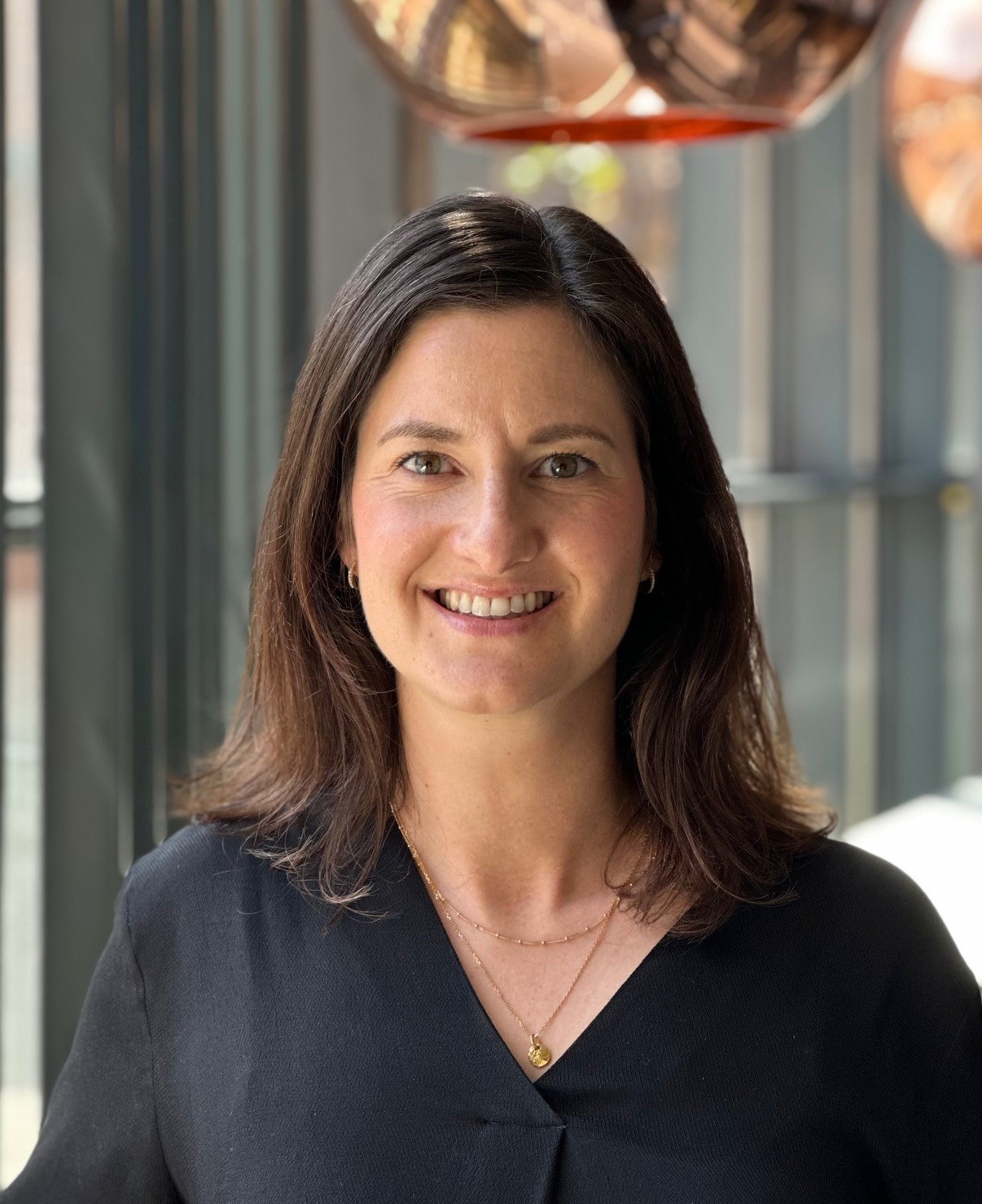
‘We know screens play a major role in families with young children. And if you are unaware of the consequences or lack alternatives, screens are an easy solution,’ says senior associate professor Julia Salado-Rasmussen, who is project manager of Digital Balance.
‘There are multiple general recommendations within this area – including by the Danish Health Authority. But we also have to consider it when it comes to professional advice from midwives, health visitors and educators, for example,’ she says.
Need for good alternatives
The project will develop a shared professional approach to guidance on screen usage, so that practitioners across fields can offer systematic and knowledge-based support to parents, from pregnancy until their children start school.
Screen usage is not only a question of habits. It also has many functions in daily life, such as helping calm things down when parents themselves are under pressure. That is why it is not sufficient to ask for lower screen usage. We must find realistic and meaningful alternatives for those scenarios, giving children better opportunities for contact, play and movement., project manager of Digital Balance.
Inequality and screen usage
Screens do not dominate equally in all homes. Research shows that children in families with lower education and income levels spend more time in front of a screen – and in these cases, parents more rarely change behaviour as a result of general recommendations.
‘That is why we focus on counselling and alternatives that make sense in daily life, regardless of the social and financial conditions of the family,’ says Julia Salado-Rasmussen.
What does the research tell us?
-
Screen usage has largely negative effects
Excessive screen time can limit the early linguistic, social, physical and emotional development of children. Among other things, this is because it replaces movement, face-to-face interaction, play and the development of self-regulation and emotional competences (Rayce et al., 2024; Sundqvist et al., 2021; Swider-Cios et al., 2023, Ponti, 2023).
-
Affects contact and intimacy
When parents use screens while spending time with a child, the contact and intimacy is disturbed. This can lead to the child receiving less emotional support and experiencing more stress (Nøkleby et al., 2022; Tombeau Cost et al., 2020).
-
Social inequality of screen habits
Children in families with lower educational levels and low household income spend more screen time. At the same time, these families are less inclined to react to general campaigns and health recommendations (Pedersen et al., 2022; Krogh et al., 2021).
-
Screens may have a few positive effects
A limited amount of screen time with interactive and educational content can support the linguistic development of young children. However, excessive and passive screen time has largely negative effects on children’s well-being and development (Bal et al., 2024; McArthur et al., 2020).
-
Previous interventions have had limited effects
Short-term, isolated interventions have shown only little effect, especially when implemented by professionals alone, not researchers (Jones et al., 2021; Oh et al., 2022).
Raising skills across professions
The first phase of the project has been initiated. Together, the researchers and practitioners survey how screen usage is part of counselling today, and what needs and challenges practitioners and parents are seeing.
‘Our hypothesis is that there is a large difference in how – and whether – screens are part of the counselling. That is why we will interview both midwives, health visitors, educators and social workers, as well as parents, to understand what is happening in practice,’ says Julia Salado-Rasmussen.
The goal is to develop things like informational materials and skill development courses for practitioners. The course will ready them to advise parents on screens in a way that makes sense as part of busy daily lives and considers the different conditions of families.
‘We wish to make it easier for practitioners to have this discussion with parents and create something that works and can actually be used in practice,’ says Julia Salado-Rasmussen.
The project has been initiated at the Centre for Better Childhoods and is expected to run until around 2030.
The project step by step
-
Exploration phase
The researchers survey existing practice and attitudes among parents and practitioners. Among other things, the following questions are explored:
- How screen usage is part of daily life
- What functions screens perform for parents
- How and whether screens are part of counselling today
The survey employs interviews, questionnaires and workshops with parents, midwives, health visitors, educators and social workers. Organisations such as Mødrehjælpen (Mother’s Aid) and Save the Children are also included.
-
Design phase
Based on the knowledge gathered, the researchers and practitioners collectively design an intervention to be tested. This could include:
- Informational materials for practitioners
- Inspirational materials for parents
- A skill development course to empower practitioners’ knowledge base across fields
-
Test phase
The materials and the intervention are expected to be tested in collaboration with municipalities and institutions. The first test concerns feasibility – that is, whether the intervention will work in practice – secondly, the researchers measure the effect on things such as:
- The screen time of children and adults
- Intimacy and contact in daily lives
- Practitioners’ experience of usability and relevance
-
Evaluation phase
In this phase, researchers are expected to evaluate the effect of the intervention. Whether cross-disciplinary counselling actually leads to less screen time, less disturbance of interactions and more intimacy in daily life.
At the same time, they measure children’s, parents’ and practitioners’ experience of the interventions and whether they create lasting change. The evaluation should lead to knowledge of what elements work most well and how the intervention can be widely disseminated in municipalities and institutions.
Facts about the project
Title: Digital Balance (DIBAL)
Purpose: Developing, testing and implementing a long-term intervention where practitioners systematically advise parents on screen usage in the first six years of children’s lives.
Target group: Parents of children aged 0–6 years – with a particular focus on families in vulnerable positions.
Focus:
- Limiting so-called technoference – disturbances of the interaction between children and adults as a result of screens
- Promoting intimacy, movement and play in families with young children
- Heightening professionals’ knowledge and tools to advise on digital well-being
Project manager: Senior associate professor Julia Salado-Rasmussen of University College Copenhagen.
Collaborators:
- UCN: Senior researcher Allan Riis, PhD
- SDU: Professor Anders Grøntved, PhD, and postdoc Jesper Schmidt-Persson, University of Southern Denmark
These collaborators function as project partners and experts, contributing knowledge and insights into the screen usage of families.
Want to know more?
If you want to know more about the project or about opportunities for collaboration, feel free to contact project manager Julia Salado-Rasmussen.