New project to strengthen collaboration surrounding children – before problems arise
When practitioners collaborate across fields and include parents, difficulties in the lives of children can be managed before becoming too large. In the project Collaboration as Early Intervention, researchers, practitioners and parents will develop a collaboration model to strengthen cross-disciplinary preventive work.
5. September 2025
How do pedagogues, social workers, health visitors and parents best collaborate to support the well-being and development of the youngest children?
The project Collaboration as Early Intervention revolves around this question. The project has just been launched at the Centre for Better Childhoods.
Researchers, practitioners and parents will develop a collaboration model that allows for the discovery and management of difficulties in the lives of children before they become too large.
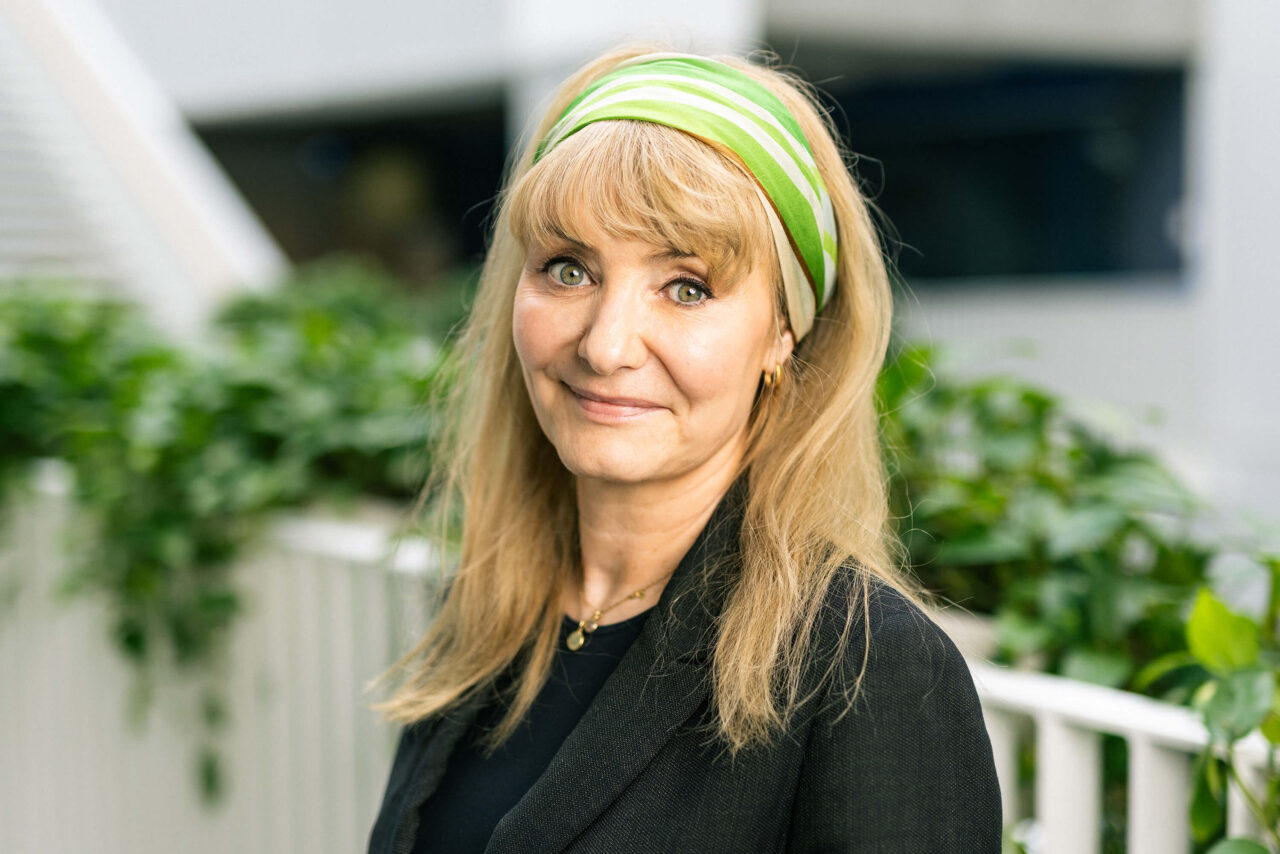
‘Cross-disciplinary collaboration on children is complex. One reason for this is that we have organised ourselves in silos, where professionals rarely meet across disciplines. And because some understandings and workflows that dominate the individual professions do not always harmonise,’ says senior associate professor Crisstina Munck, who is project manager.
‘That is why, together, we have to find a way to collaborate that works in practice. And which will make sure that fewer children end up having challenges that require extensive intervention,’ she explains.
Collaboration should be seen as a preventive intervention
Early signs of poor well-being can appear in many ways. For example, the child may have difficulties expressing itself, motor skill challenges or a lack of interest in playing with other children. If action is taken in time, the difficulties can often be solved by simple means. If not, they may develop into complex issues.
Today, practitioners typically wait to collaborate on helping a child until more fundamental problems have emerged. We wish to change that. In the project, we examine collaboration as a preventive intervention in its own right. And as something that may qualify and lead into other types of organising to prevent more challenging issues., project manager of Collaboration as Early Intervention
When cross-disciplinary collaboration only takes place after a problem has escalated, families may feel that the system is against them.
‘If, for example, a case results in a notification to the authorities, it may break the families’ trust in the wellfare professionals. And that makes collaboration much more difficult,’ she explains.
Exploring experiences from family centres
The project builds on work that is already taking place in municipalities that have established family centres or similar organisations, where families are offered support and counselling.
The family centres differ from one municipality to another. Some are physical units, while others are organised interfaces for collaboration between administrative structures. However, they are all cross-disciplinary in their work on prevention and early intervention for families.
‘In the project, we want to explore how family centres currently work and whether they could interact more closely with, for example, the daily lives in daycares. Pedagogues know a lot about the daily lives of children, since 98 percent of all children spend eight to nine hours each day at the institution. Hence it is obvious to use that knowledge actively,’ explains Crisstina Munck, continuing:
‘We are curious on how the collaboration takes place at the family centre, and we would like to expand on their experiences and find out how to develop and create even better links between family centres, parents and daycares,’ she says.
Relational coordination at the level of the child
American researcher Jody Hoffer Gittell invented the term relational coordination, which serves as inspiration for the team behind Collaboration as Early Intervention.
Relational coordination tells us that complex problems are solved most easily when practitioners coordinate interventions based on shared goals, shared knowledge and mutual respect. This requires frequent communication and a focus on problem-solving.
‘Research shows that the quality of collaboration across disciplines plays a key role. And that it benefits both staff and citizens when relation coordination is successful. We will use this as context and examine whether practitioners, inspired by relational coordination, can create better conditions for children’s well-being. And for collaboration with parents,’ says Crisstina Munck.
What would a collaboration model look like?
In the project, researchers, practitioners, managers and families collaborate closely to develop and test a model for cross-disciplinary Collaboration as Early Intervention.
‘As researchers, we are not making up solutions from an ivory tower. We develop, test and adjust the model together with municipalities, families and practitioners. And it is based on their knowledge and experiences,’ says Crisstina Munck.
The shape of the collaboration model will be determined collectively along the way.
‘As an example, it could involve setting up meetings between pedagogues, social workers, health visitors and pedagogical-psychological consultants with fixed intervals. Meetings where they include parents’ perspectives, make decisions together and make sure that agreements are followed up on. This could be a way to link educators’ knowledge of children’s daily lives with the efforts of family centres and the perspectives of parents,’ she explains.
The project step by step
-
We survey existing practice
The project starts by exploring how collaboration currently works at family centres and similar organisations – and how that interacts with the daily lives of children in kindergartens.
-
Professionals and parents join in
Pedagogues, social workers, health visitors, pedagogical-psychological consultants and parents partake in interviews and workshops, and their experiences and perspectives become an active part of the development work.
-
We develop a collaboration model
Together with professionals, managers and parents – and based on the principles of relational coordination – we develop a model to turn cross-disciplinary collaboration into an early, preventive intervention.
-
We test the model in municipalities
The new collaboration model is tested in the municipalities that take part in the project. Here, we examine how it works in practice and how both professionals and parents experience it in daily life.
-
We evaluate and adjust
Based on the experiences, we adjust the model and test its effect in additional municipalities.
-
We disseminate and implement
Should the collaboration model show positive effects, we will work on disseminating and implementing it widely in municipalities across the country.
A new way to collaborate, for the benefit of all families
Along the way, the researchers will examine the effect of the intervention. This includes whether practitioners become more acquainted with each other’s practice, whether they collaborate at an earlier time and in more informed way. And whether parents feel more included and supported.
‘We hope to show that closer collaboration across fields can make a real difference. Both for children, families and practitioners. If we succeed, we can contribute to improving the well-being of children and lowering the need for more invasive interventions,’ says Crisstina Munck.
Should the results be positive, the collaboration model will be disseminated to municipalities across the country and eventually turn into a common method of preventive work, for the benefit of all families.
Contact