New project to empower parents-to-be in psychosocially vulnerable situations
How do you learn to foster a healthy relation with your child if you have never felt safe while growing up? This question is at the heart of the research project Prepared for Parenthood.
8. May 2025
In the project Prepared for Parenthood, researchers and practitioners will develop an intervention to help parents-to-be in psychosocially vulnerable situations create a healthy relation with their expected child – and have a good start to family life.
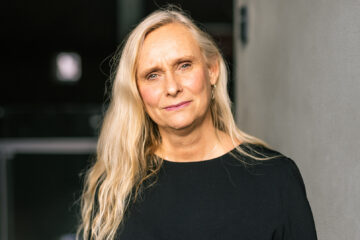
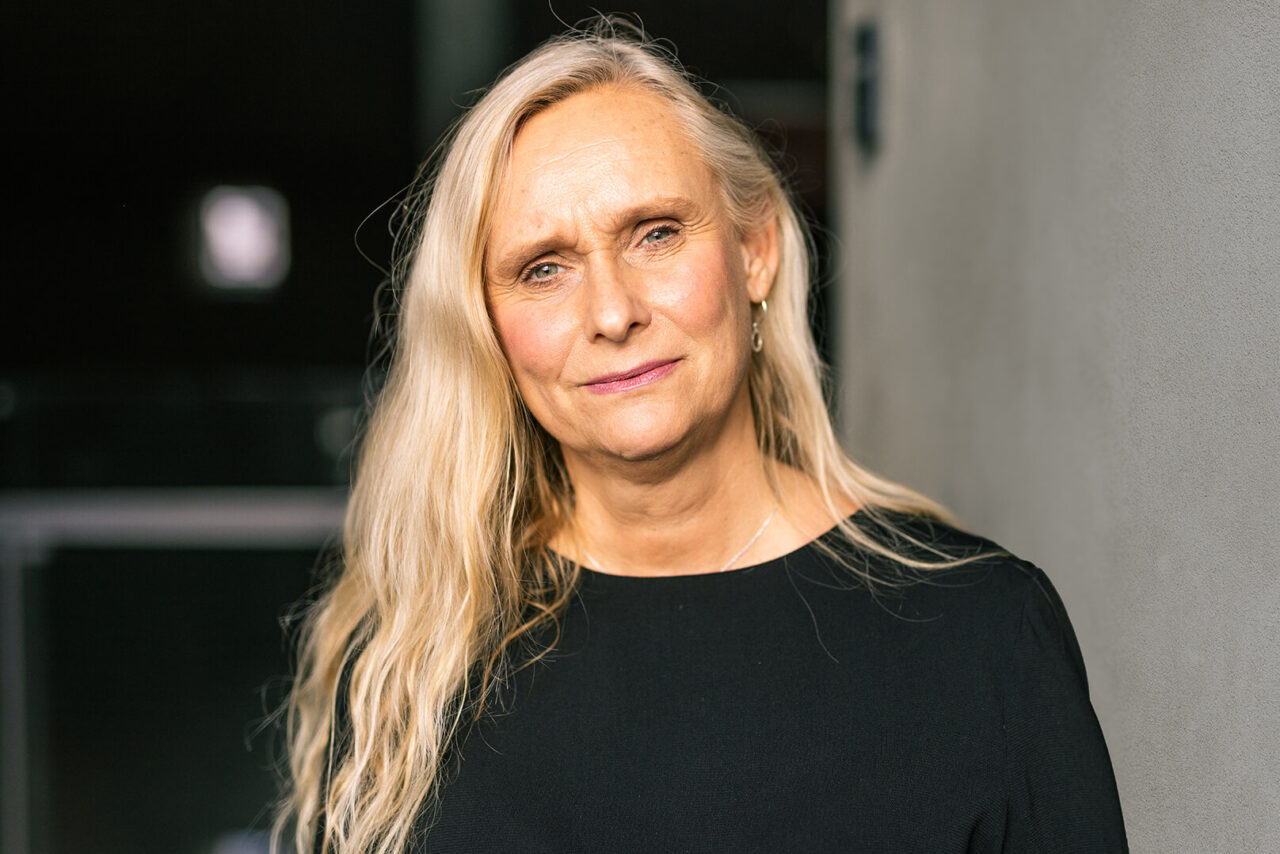
‘We direct attention to a group of parents that often fall between two stools,’ says researcher and senior associate professor Helle Johnsen of University College Copenhagen, who is the project manager of Prepared for Parenthood.
‘They face too many challenges to get by with the general offers, but they are not burdened enough to have access to specialised interventions. We have to develop an intervention that works for them,’ she says.
The project has been launched at the Centre for Better Childhoods and is carried out in collaboration with Center for Clinical Research and Prevention at Bispebjerg and Frederiksberg Hospital.
Many are not found
Psychosocial vulnerabilities like anxiety, depression, trauma and stress are more and more prevalent in society. Also among parents-to-be.
‘More young people are suffering, and this will be reflected in future prenatal care. The system is already under pressure, and we need new solutions that are simple, accessible and do not place too many demands on parents,’ says Helle Johnsen.
Prepared for Parenthood expands upon Helle Johnsen’s previous study Invisibly Vulnerable, which explored the extent of psychosocial vulnerability among pregnant people who were otherwise considered to be at low risk.
We were actually surprised how many pregnant people had grown up under traumatic circumstances, e.g. emotional or physical violence or neglect. Many of them had never been offered any kind of help., project manager, Prepared for Parenthood
Some of the results from Invisibly Vulnerable were:
- 45% of pregnant people had grown up under one to three different traumatic circumstances
- 12% of pregnant people had grown up under four or more different traumatic circumstances
Moreover, interviews with pregnant people showed that trauma in childhood or youth can cause doubts about your abilities as a mother or father.
Interventions vary far too much
A survey made by Helle Johnsen and researchers at University College Copenhagen, Center for Clinical Research and Prevention and the Department of Psychology at the University of Copenhagen reveals major differences across the country in terms of available interventions for families in emotionally vulnerable situations. This concerns both their extent, type and availability.
The study also showed that many interventions were offered to the target group, but that they either lacked systematic evaluation or were evaluated to have no effect.
‘This means we do not know whether the large majority of the interventions actually affect families positively,’ says Helle Johnsen.
Moreover, there is much geographic inequality. Some municipalities offer many different interventions, with opportunities for flexible support, while other municipalities barely offer any interventions.
‘More interventions pose demands that may inadvertently exclude parents in vulnerable situations – such as requirements for knowing Danish or being able to reflect on your emotions. This means that the families most in need of help may find it hardest to access it,’ explains Helle Johnsen.
Facts: Where are interventions available today?
The national survey identified 160 interventions targeting vulnerable pregnant people and families with small children. The interventions are found across:
- Municipal interventions – e.g. health visitation and child and youth sections
- Regional interventions – e.g. maternity wards
- Voluntary organisations – e.g. Mødrehjælpen (Mother’s Aid)
However …
- Most of the interventions have no documented effect
- There is much geographic inequality in terms of where the interventions are found
- Several interventions require the parents to have certain skills in order to receive access
- Collaboration across professions is often limited
An intervention that works for all
The aim of Prepared for Parenthood is to develop, test and implement a group-based intervention for parents in psychosocially vulnerable positions, starting during pregnancy and continuing after birth.
The programme will strengthen the interaction between parents and their child – e.g. by giving parents tools to regulate their own emotions and reactions.
The intervention should be simple, short and adaptable to the individual needs of parents.
‘Together with practitioners, we will create an intervention that has a real, positive effect for families and makes sense for practitioners,’ says Helle Johnsen.
‘We focus on strengthening the cross-disciplinary collaboration surrounding the families, and we are developing the intervention together with both midwives, health visitors and social workers, who should be able to carry out the intervention together.’
It takes experience to love
Some parents-to-be in psychosocially vulnerable situations find it hard to understand how to connect with the child they are expecting.
If you have experienced severe neglect, it is a hard ask to expect instinctive love for another human being. Especially if you never had that experience while growing up., project manager, Prepared for Parenthood
That is why the point is not to provide parents with complex tools or theory.
‘We focus on developing and supporting fundamental competences that may help parents read the signs of their infant and understand its needs. This can be challenging if you yourself have experienced neglect early in life,’ says Helle Johnsen.
She adds that part of the challenge for this group of parents is seeing the child as a separate individual.
‘They may happen to think of themselves and the child as one entity – because the child has always been in the womb, and they have carried it with them. So, the first step is to realise that the child is another human with its own needs and emotions, which do not necessarily match your own,’ says Helle Johnsen.
Prepared for Parenthood runs through 2029 and is partly financed by Liljeborgfonden.
The project step by step
-
We gather knowledge
We start off with a literature review to gather existing knowledge on early interventions for psychosocially vulnerable parents.
-
We include those it concerns
Parents, practitioners and NGOs take part in the design process from the start to make sure the intervention fits with practice and is relevant to the target group.
-
We develop a new intervention
Together with parents, practitioners and voluntary organisations, we develop an intervention in the form of a group programme for expecting and new parents.
-
We empower professionals
The midwives, health visitors and social workers involved receive a training course, so they are able to perform the intervention.
-
We test in real life
The intervention is tested at maternity wards in the Zealand Region. We evaluate both feasibility, the outcome for participants and the experiences of professionals.
If the intervention shows feasible in practice, we subsequently test it for documented effects.
Want to know more?
Contact project manager Helle Johnsen for more information about Prepared for Parenthood.