
Core narrative
We support the judgement of professionals by creating knowledge about what works – so that more children may have a good start to life
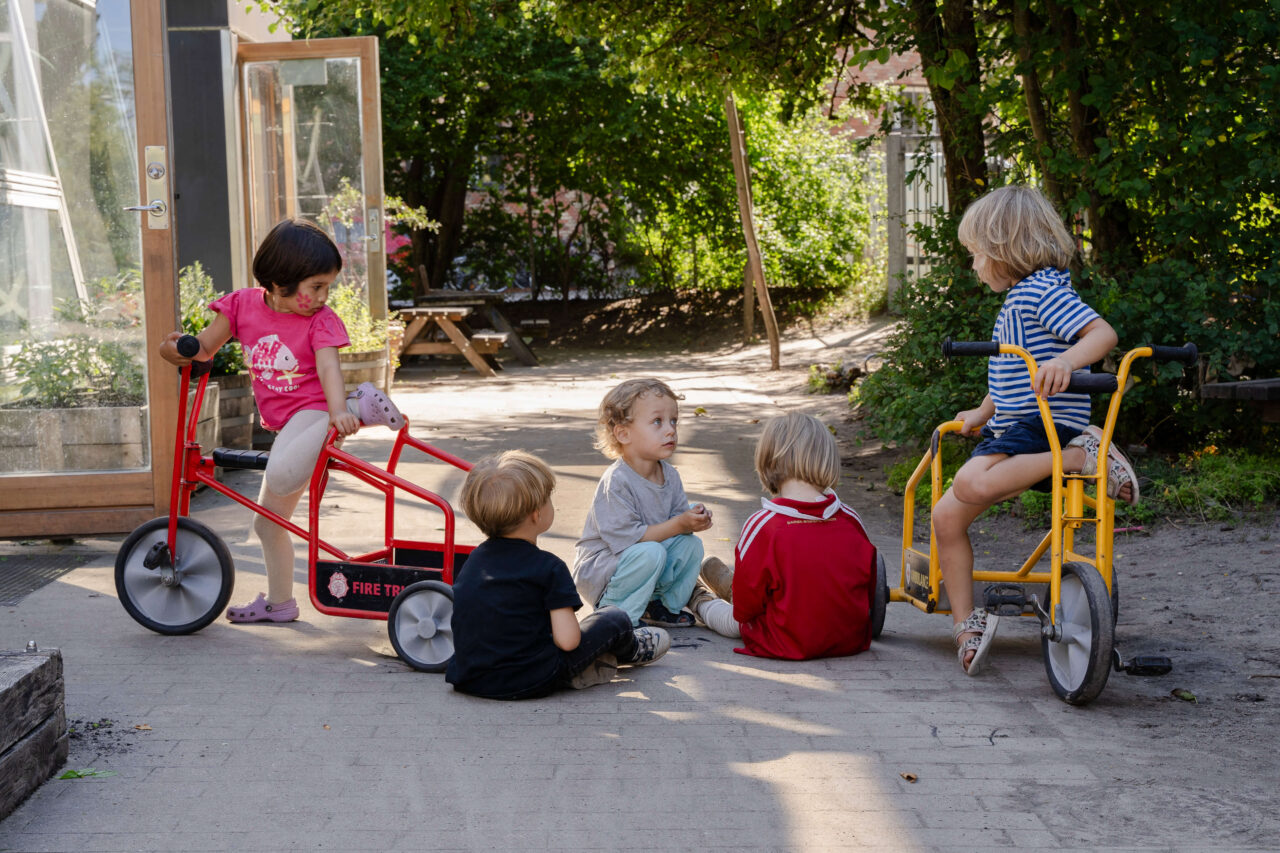
All children, no matter their background, should have equal opportunities for a good, safe start to life. A good childhood full of play and activity. Positive child communities that anyone can be a part of. As well as safe and supportive relations.
That is what we work for at the Centre for Better Childhoods.
We create knowledge on how welfare professionals can work in ways that benefit 0–6-year-olds and their families – so that these children thrive and develop physically, mentally and socially. And we explore how practitioners can turn that knowledge into practice.
We bridge research, education and practice
There is a lot of knowledge on what matters to the well-being and development of children. That knowledge, however, does not benefit children sufficiently. We need to change that.
We work to connect research, education and practice. So that the knowledge we create becomes part of the knowledge base for welfare professionals whose task is to shape the first years of children, now and in the future.
Centre for Better Childhoods is based at University College Copenhagen and supported by the Novo Nordisk Foundation, the LEGO Foundation and TrygFonden.
Being the first major fund-financed research centre to be located at a University College in Denmark, we have the opportunity to consider the long term. If the interventions we develop work, we can make sure they are disseminated and used in practice. And if they do not work, we can explore why.
We develop new ways of working, together with practitioners
The projects at the Centre for Better Childhoods are always conducted in close collaboration between researchers and practitioners. Together, we develop new knowledge and new ways of working, benefiting children, and these become integrated into practice.
We believe that co-creation and partnerships are key to creating lasting and sustainable change, as well as knowledge that practitioners can use in real life. That is why their experiences, challenges and needs are crucial when we develop, test, adjust and implement interventions shoulder to shoulder.
We investigate practice that already works
Beside developing new practice, we expand upon the things that work well in the practitioners’ work with young children and families.
To understand and support good practice, we investigate what benefits children. How it works. Why it works. For whom and under what conditions it works. In this way, we can explain and share good practice, so it may benefit children and families.
We create a solid foundation for the judgement of professionals
Every day, practitioners make decisions that shape the lives of children and parents. Decisions that are often to be made swiftly and in complex situations.
Those decisions should be made on a foundation of knowledge about what benefits children and their parents. And on a foundation of knowledge that accounts for the conditions under which practitioners make decisions.
We create that foundation together with the practitioners.
When a midwife meets an anxious parent to be. When a health visitor evaluates the eye contact of an infant. When a social care worker meets a family under pressure. When an educator notices a child withdrawing from play. When a speech therapist hears a four-year-old struggling with language, or when a psychomotor therapist helps a child find calm.
The knowledge we develop together with practitioners strengthen their conditions for making good decisions in situations where judgement is of essence.
We support inter-professional cooperation
We create knowledge that individual professions can put into practice. But we also investigate how practitioners may better cooperate across professions, competences, experiences and understandings.
Giving all children equal opportunities requires that practitioners find cross-cutting solutions that will accommodate all circumstances of the child and the family. That is why we explore how cooperation works best in practice – so that all children receive the support they need.
